
TX
Belton
Wood Protection That Preserves Natural Appearance
Fence Staining – Metal and Wood in Belton for protecting wood from moisture damage, sun exposure, and natural weathering
Wood left unprotected turns gray, absorbs water that causes boards to warp and split, and deteriorates faster in areas with repeated wet-dry cycles common to Central Texas. Staining penetrates wood fibers rather than forming a surface film, providing protection while allowing the grain pattern and texture to remain visible. Brothers Landscaping Belton applies stain to new installations and existing wood fences, extending material life while maintaining the natural look that many property owners prefer over solid paint coverage.
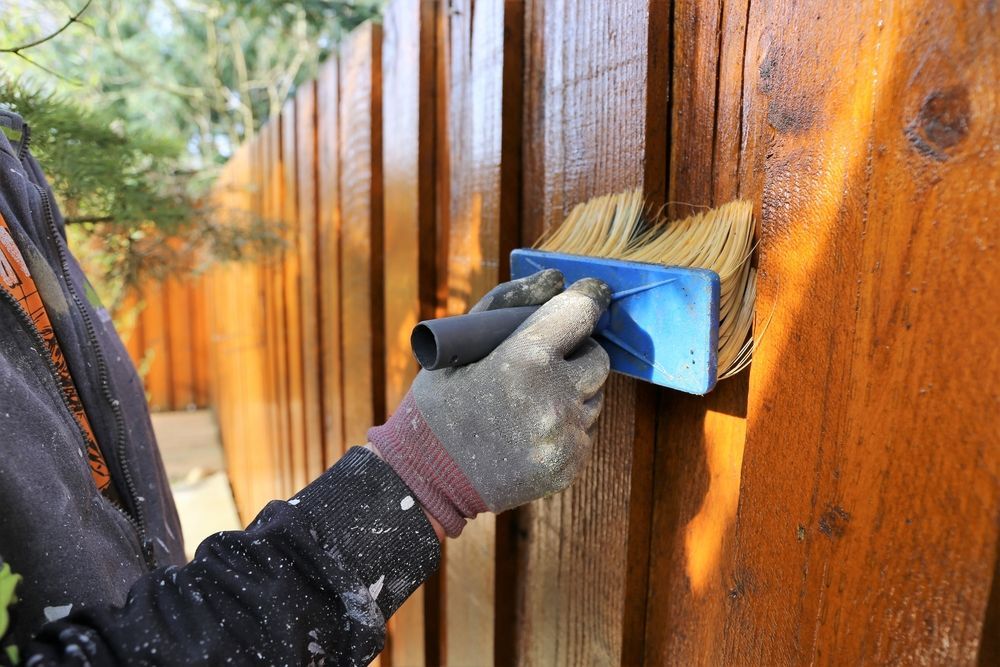
The staining process begins with cleaning the wood to remove surface dirt, mildew, and any previous coating that has failed, since stain penetrates only into clean, bare wood fibers. Application uses brushes or rollers to work stain into the wood rather than simply coating the surface, which ensures even absorption and consistent color. Back-brushing forces stain into end grain and corners where water infiltration typically starts, and excess stain is wiped away to prevent sticky buildup that attracts dirt.
Arrange a staining estimate to determine whether your fence requires cleaning, and how many coats will achieve the desired color depth.
What Changes After Staining Is Complete
Stain soaks into the wood rather than sitting on top, so the grain pattern remains visible with added color depth and richness. The fence surface feels dry to the touch once the stain cures, not sticky or tacky like incompletely dried finishes. Water from rain or irrigation beads on the wood surface initially rather than soaking in immediately, which is the visible indicator that the protective barrier is functioning properly.
Stained fences don't develop the peeling or flaking common with painted surfaces, though the color will fade gradually over time as UV exposure breaks down the pigment. Horizontal surfaces like post caps and top rails fade faster than vertical boards because they receive more direct sun and shed water more slowly. The wood underneath remains protected even as the visible color lightens, but re-staining every two to four years maintains both appearance and the maximum level of moisture resistance.
Staining does not fill cracks, repair splits, or stabilize loose boards. Any structural issues should be addressed before staining, since applying stain over damaged wood protects the surface but doesn't restore the wood's strength or prevent further movement. Staining also won't change the texture of rough-sawn wood or smooth down splintered surfaces.
Common Questions About This Service
Homeowners often ask how staining differs from painting, how long stain lasts, and whether older fences can be stained successfully.
What's the difference between solid stain and semi-transparent stain?
Solid stain hides most of the wood grain and looks similar to paint but penetrates rather than forming a surface film, while semi-transparent stain allows the grain and some natural color variation to show through while still adding significant UV and moisture protection.
How do you prepare a fence that's never been stained?
New or bare wood is cleaned with a mild detergent solution to remove mill glaze or surface contaminants that prevent stain absorption, then allowed to dry completely, since stain applied to damp wood won't penetrate evenly and results in blotchy color.
Why does stain fade faster on some fence sections?
Sections facing south and west receive more intense UV exposure during afternoon hours, which breaks down pigment faster than shaded or north-facing sections, and horizontal surfaces accumulate more UV exposure than vertical boards throughout the day.
Can you stain a fence that was previously painted?
Stain won't penetrate through paint, so the old paint must be stripped or sanded off to reach bare wood, which is labor-intensive and may not be cost-effective compared to repainting, particularly if the existing paint is in good condition.
How long should you wait to stain a new wood fence in Belton?
New pressure-treated wood should dry for at least 30 days after installation so surface moisture and treatment chemicals can evaporate, since stain applied to wet or freshly treated wood won't absorb properly and will result in uneven color and reduced protection.
Brothers Landscaping Belton evaluates wood condition and previous finishes during staining consultations, so the preparation approach matches your fence's specific needs. Schedule a staining consultation to review your wood fence's current condition and appropriate maintenance timing.